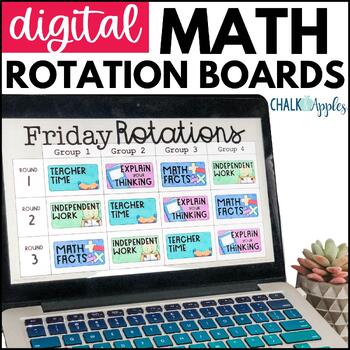

Math centers can be a dynamic way to engage upper elementary students in hands-on learning experiences that reinforce key mathematical concepts. By incorporating various activities, teachers can create an enriching environment where students can explore, practice, and deepen their understanding of math. Let’s take a closer look at some classroom math centers that can spark excitement and foster mathematical growth in your classroom.

Students tackle math puzzles, brainteasers, and real-world problems at these classroom math centers. These activities encourage critical thinking, perseverance, and creativity as students grapple with mathematical challenges. From logic puzzles to word problems, this center offers a platform for students to apply their mathematical skills in meaningful contexts.
Escape Games are another option for engaging students in meaningful learning experiences. My shop has many different escape games to encourage students to work together. These puzzles always get them excited, and everyone learns something new.

Who says learning math can’t be fun? The math games corner is where students can engage in interactive games that reinforce mathematical concepts such as addition, subtraction, multiplication, and division. Whether it’s a board game, card game, or digital game, students can sharpen their math skills while enjoying friendly competition with their peers.
Math Card Games are a fun way to reinforce skills learned during a lesson. They are simple to use because you only need a deck of cards. Students will enjoy working with partners to solve the equations and record their answers.
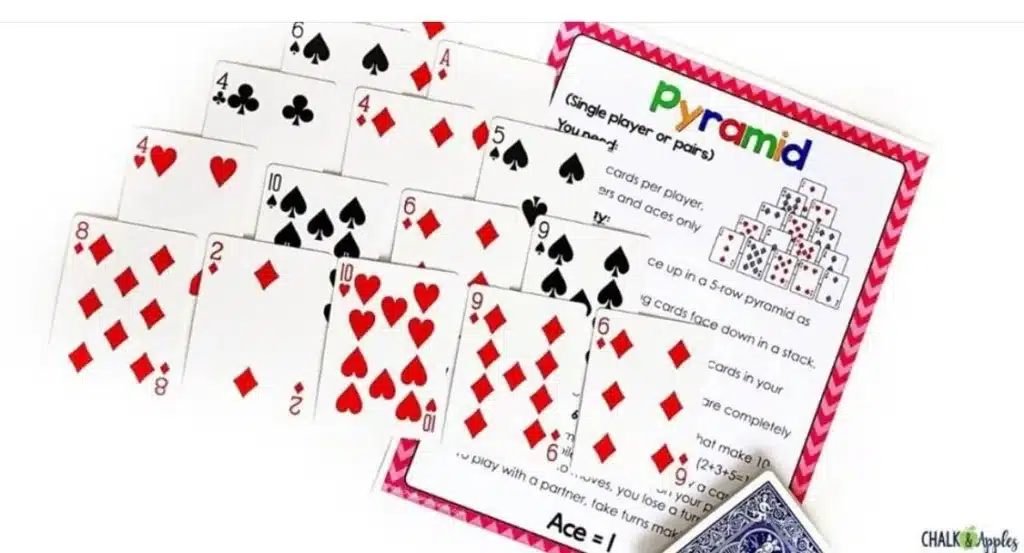
Tactile learners rejoice at the hands-on manipulatives area! Here, students use physical objects like blocks, counters, geometric shapes, and measuring tools to explore mathematical concepts concretely. Whether building shapes, measuring angles, or visualizing fractions, manipulatives provide a multisensory approach to understanding math.
Technology can be a powerful tool for learning math in the digital age. At the math technology hub, students can interact with math apps, educational websites, and digital simulations that offer personalized practice and immediate feedback. Technology can enhance engagement and support individualized learning goals, from online math games to interactive tutorials.
Digital Dice Games will motivate students to learn math facts using objects in their hands and on the screen. These are easy to administer to classroom math centers daily or several times a month.
Curiosity leads the way at the math investigation station! Here, students embark on mathematical inquiries and explorations that encourage inquiry-based learning. Whether conducting surveys, analyzing data, or exploring patterns, students can pose questions, make conjectures, and investigate mathematical phenomena in depth.
Math isn’t just about numbers—it’s also about language! The math literacy nook is where students read, write, and discuss mathematical concepts through books, articles, and word problems. Students develop a deeper understanding of mathematical vocabulary and concepts by integrating literacy skills with math, enhancing their mathematical and language proficiency.
By incorporating these diverse classroom math centers, you can create a dynamic learning environment that caters to different learning styles and interests. Whether students are problem-solving, playing games, exploring with manipulatives, or investigating math concepts, math centers offer opportunities for meaningful engagement and mathematical growth. So, roll up your sleeves, get ready to explore, and let the math adventures begin!
If you love these classroom math centers, you will also love these posts about math centers!
5 ENGAGING MATH GAMES DECK OF CARDS FOR UPPER ELEMENTARY CLASSROOMS
YOU WILL LOVE THESE 5 ENGAGING MATH GAMES ADDITION AND SUBTRACTION STYLE FOR UPPER ELEMENTARY
7 MATH GAMES DICE ARE USEFUL FOR IN THE UPPER ELEMENTARY CLASSROOM